


Understanding Control of Error in Montessori Environments
Share this Article:
A three-year-old stacks ten pink cubes into a tower, steps back, and frowns. One cube sits out of order, and the tower looks lopsided. No adult says a word. After a moment, the child lifts off the top few cubes, swaps the misplaced one, and builds again.
For parents watching a Montessori classroom for the first time, that silence can feel strange. Many of us grew up with red-pen corrections, so seeing a teacher hold back raises a fair question: will anyone help my child learn it the right way?
That pause is intentional. Control of error in Montessori classrooms means the materials, the child’s own senses, and an observant teacher work together so children can spot their own mistakes and fix them. Along the way, children build focus, patience, and confidence.
What Control of Error Means for Young Children
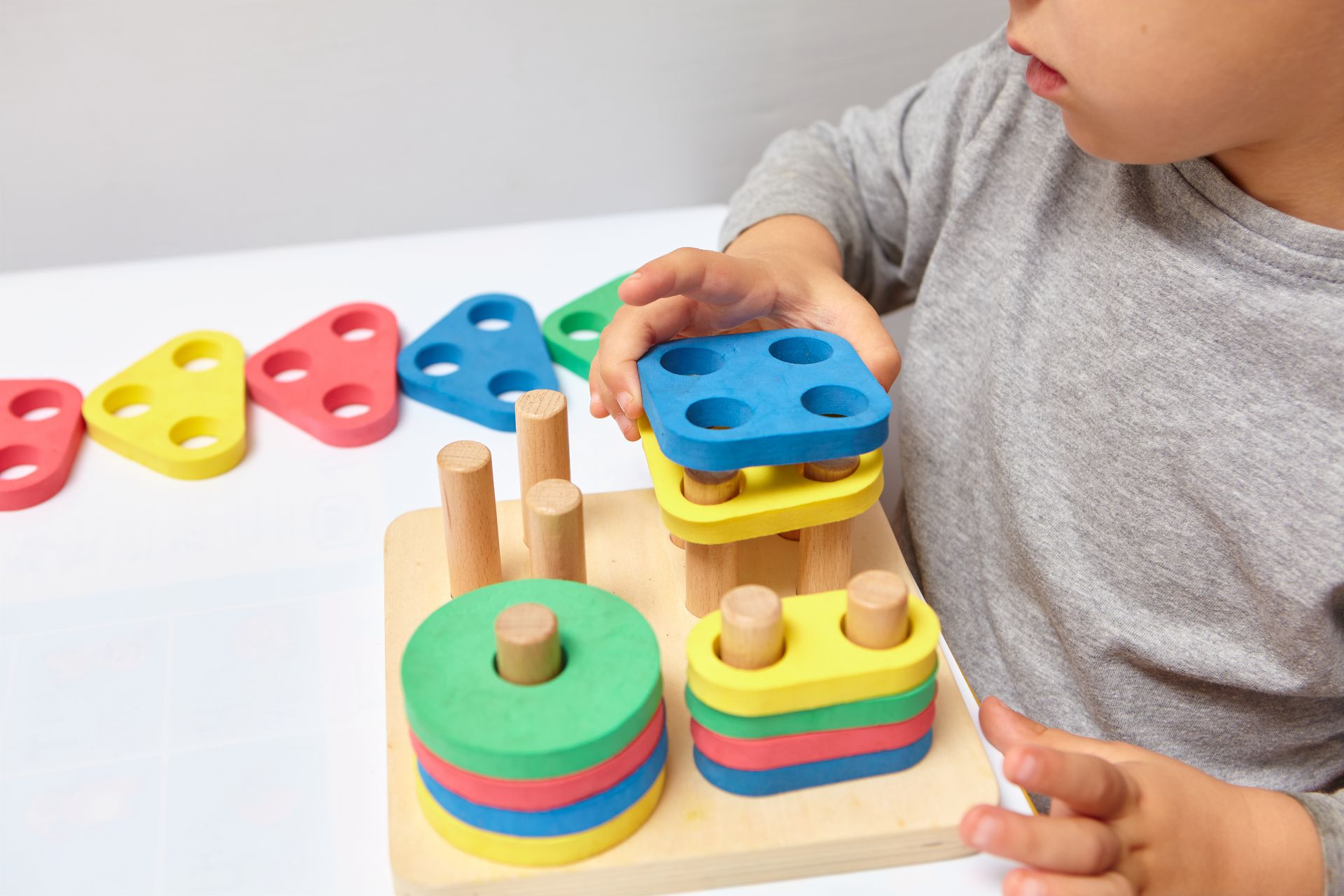
Control of error is any built-in way for a child to see that something went wrong without an adult saying so. Materials designed with this feedback in mind are among the core components of Montessori education, and control of error appears in three forms:
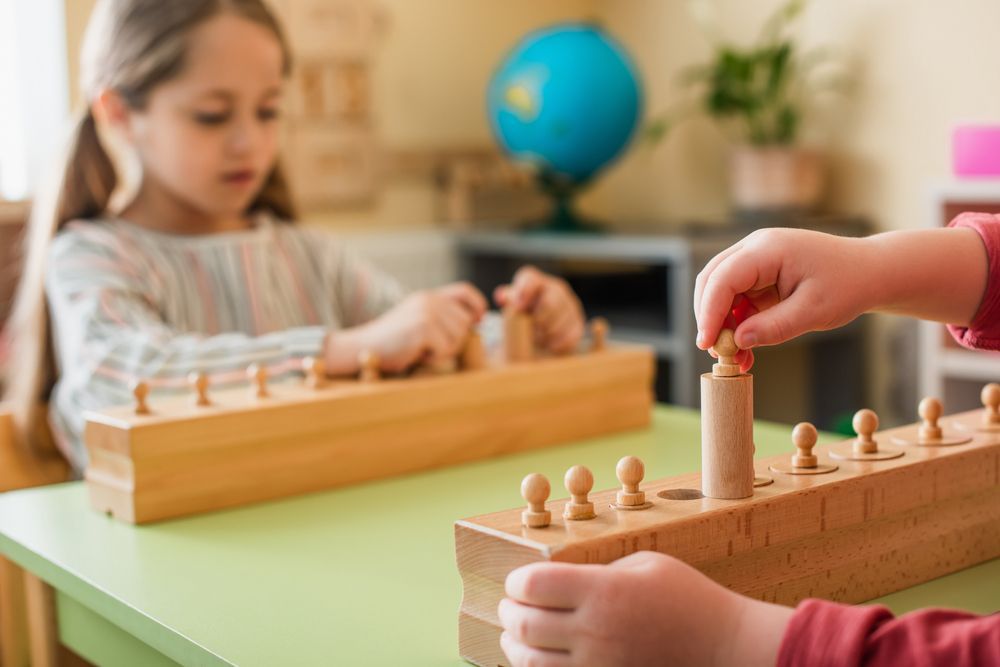
- Mechanical: The material itself reveals the error, like a cylinder block where the last cylinder won’t fit if an earlier one went in the wrong hole.
- Perceptual: The child’s eyes or hands catch the problem, like a brown stair with one step out of line.
- Adult: A teacher notices an error the material can’t reveal and shows the lesson again later.
To a young child, a mistake becomes useful information, a clue about what to try next.

How Montessori Materials Help Children Notice Errors
Self-correcting materials rely on a few simple signals that even a toddler can read. Sometimes a piece is left over, such as a peg or counter that remains after every spot is filled. Sometimes a piece won’t fit, wobbling or sticking out instead of sliding into place. Other times the work simply looks off, with an uneven row, a mismatched color, or a spill on the tray.
Each signal is concrete and immediate, so the child spots the problem while the work is still in hand. The feedback also feels impersonal. A puzzle piece that won’t fit carries no disappointment and no audience, which keeps the mistake small and the child willing to try again.
Self-Correction From Toddlerhood to Kindergarten
Control of error grows with the child. Early materials show one obvious clue, like a spill or a missing match. Later work asks children to check longer sequences, quantities, and patterns on their own.
Toddlers: Pouring and Matching Activities
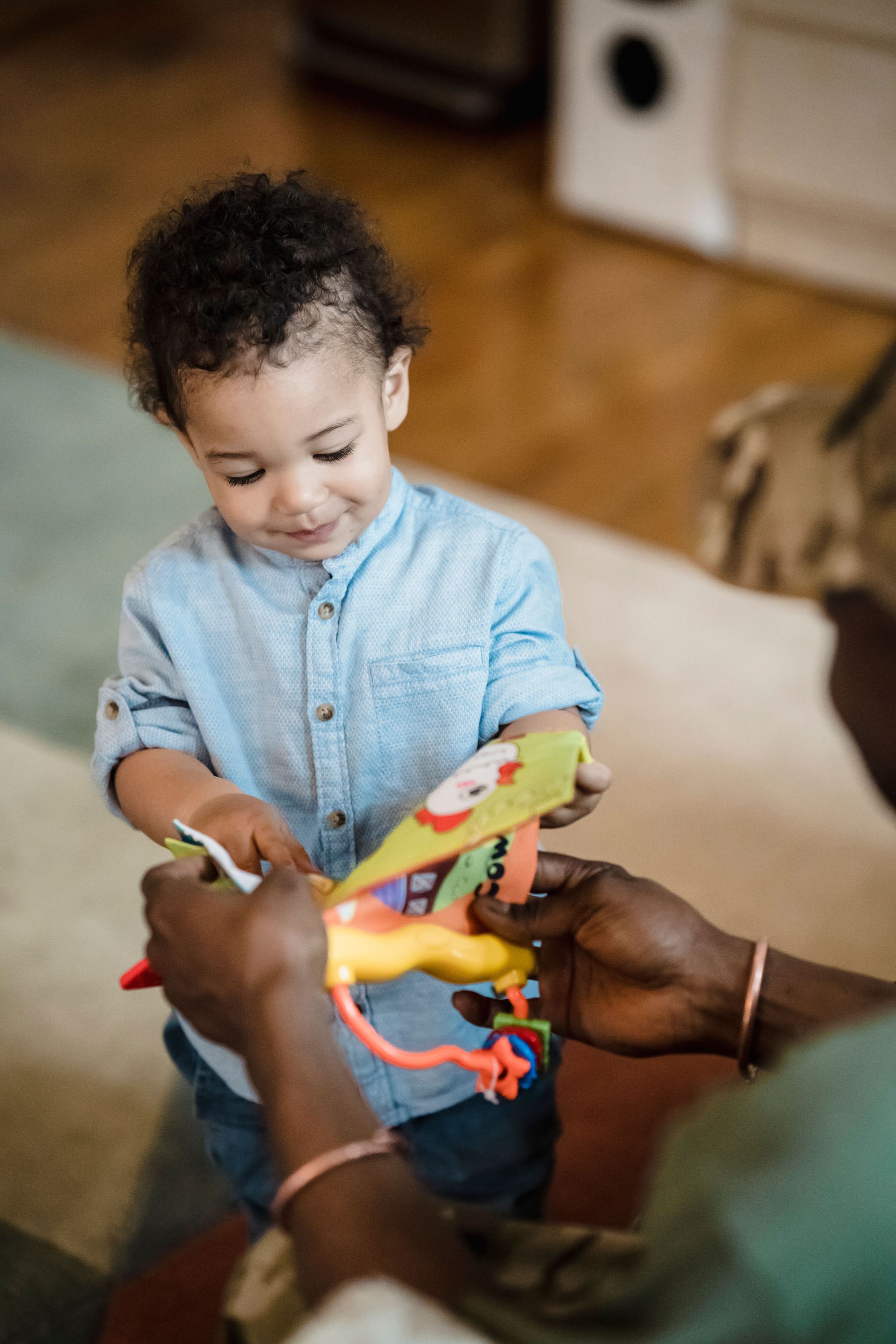
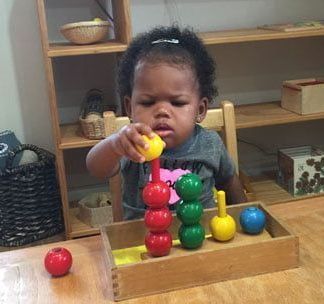
In a toddler classroom, control of error stays simple and physical. A child might pour dry beans or rice from one small pitcher to another on a tray. Any stray beans scattered across the tray show right away that the pour needs a steadier hand, and a small brush lets the child tidy up independently.
Matching work follows the same idea. A toddler pairs a small object, such as a toy apple, with its picture card. When the last object doesn’t match the last card, the child can see that an earlier pair went wrong. Many popular
activities for 2-year-olds build on this same one-clue design.
Preschool and Kindergarten: Sensorial and Math Work
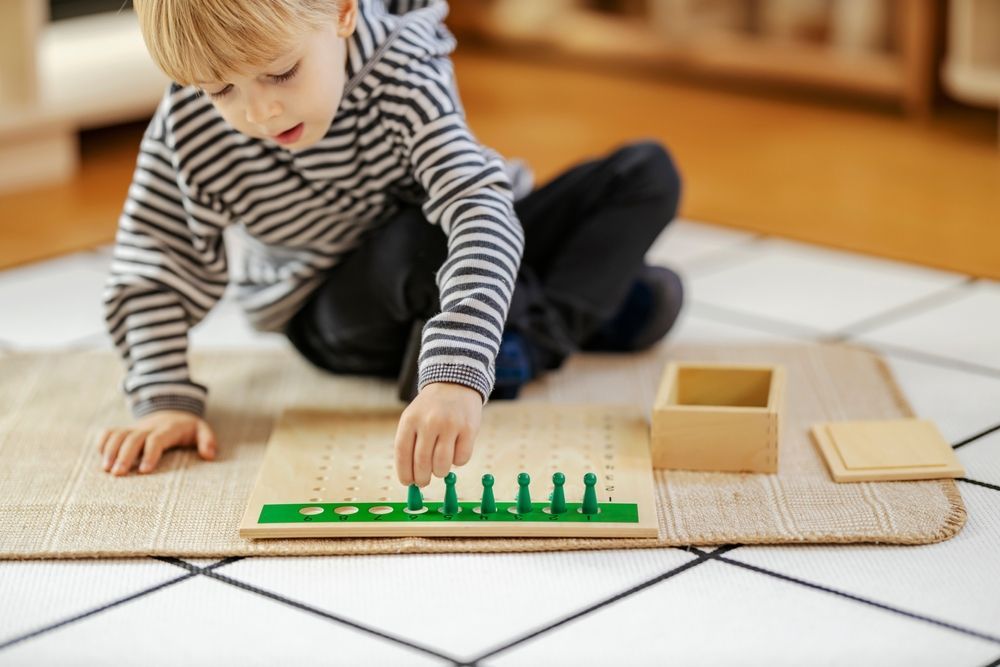
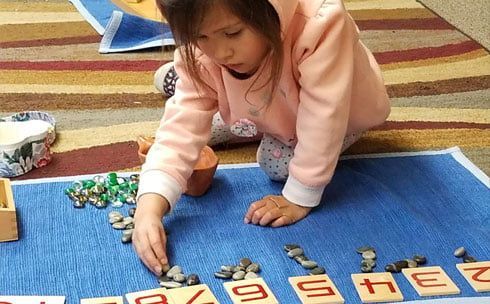
In the preschool program, sensorial and math materials ask children to compare and count with more precision. The spindle box holds exactly 45 spindles for the numbers zero through nine, so a few extra or missing at the end tells a child to recount. Puzzle maps work the same way, since each country or state piece fits only one spot.
By the
kindergarten year, the feedback becomes more abstract. Children solve addition or multiplication problems with bead materials, then check their answers against a control chart. Finding and fixing an error on their own prepares them for the self-checking habits later grades expect.
When Teachers Observe, Guide, or Step In
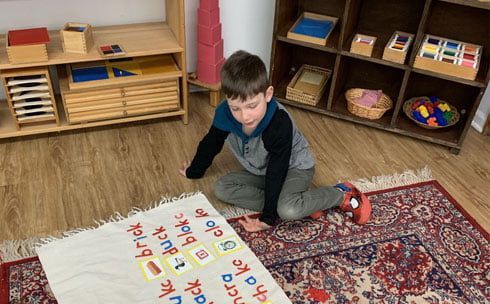
A teacher holding back can look inattentive to a parent standing at the door. In practice, observation is the main job. Mansio’s certified Montessori teachers track which materials each child chooses, how long they stay focused, and where they get stuck.
Self-correction also has limits. Some materials have no built-in signal, and some mistakes slip past a child entirely. When that happens, a teacher usually waits and presents the lesson again on another day, slowing down at the step that went wrong. Older classmates often help too by modeling the work for younger children. Stepping in at the right moment reflects
developmentally appropriate practice, which encourages adults to match their help to each child’s readiness.
Why Repetition Builds Confidence and Independence
A child who finally gets every spindle into the right compartment often dumps them out and starts over. That urge to repeat is where control of error in Montessori work pays off. Each round is another chance to check the result, and the satisfaction comes from seeing the work turn out right, with no adult needing to say “good job.”
Repetition also builds tolerance for frustration in small, manageable doses. A child who has fixed the same mistake ten times learns that errors are temporary and solvable. That belief carries into harder work, new friendships, and new classrooms. For a closer look at how practice shapes focus and coordination, read more about
repetition in early childhood learning.
How to Encourage Self-Correction at Home
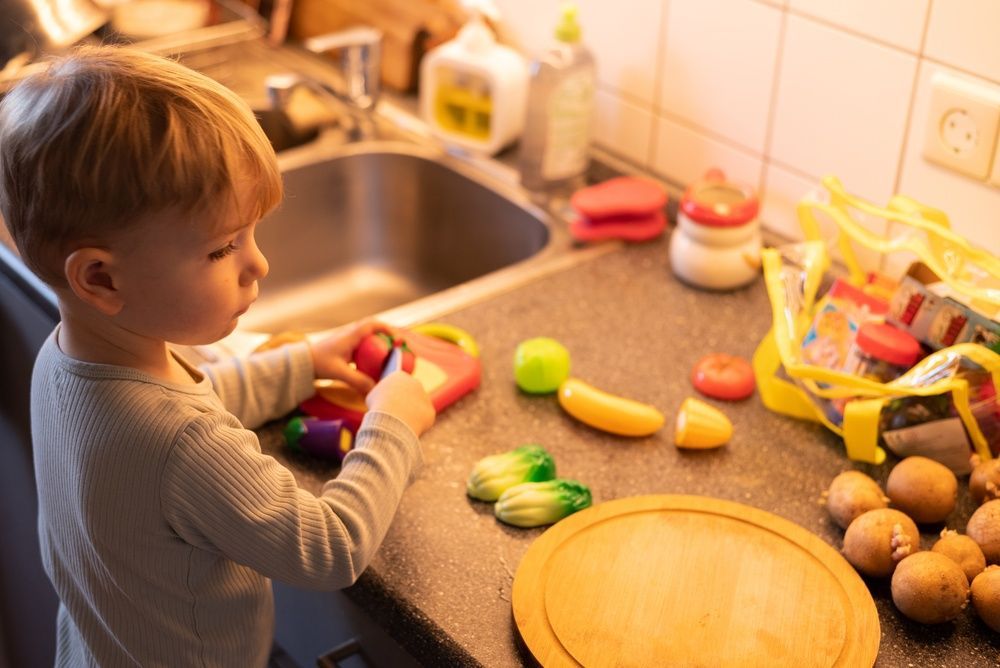
Everyday routines can carry the same built-in feedback found in a classroom. A placemat with outlines of a plate, cup, and fork shows a child exactly where each item belongs, so a missing fork is easy to spot. Setting out one napkin per person turns table setting into a counting check. Sorting mittens or socks into pairs works the same way, since a leftover means a match went astray.
When a mistake slips through, describe what happened instead of fixing it: “I see one sock without a partner.” Then wait a moment. If the child is still stuck, show the step again later. When choosing Montessori toys, look for ones with a single clear way to finish.
See Control of Error in Action at Mansio Montessori
Watching a child spot a lopsided tower and fix it without help can change how a parent thinks about mistakes. Families from Geneva and surrounding towns are welcome to
schedule a visit and see moments like that in person.
Preschool tour questions can sharpen what to look for, and
enrollment and admissions details explain how families join our three-year cycle.